
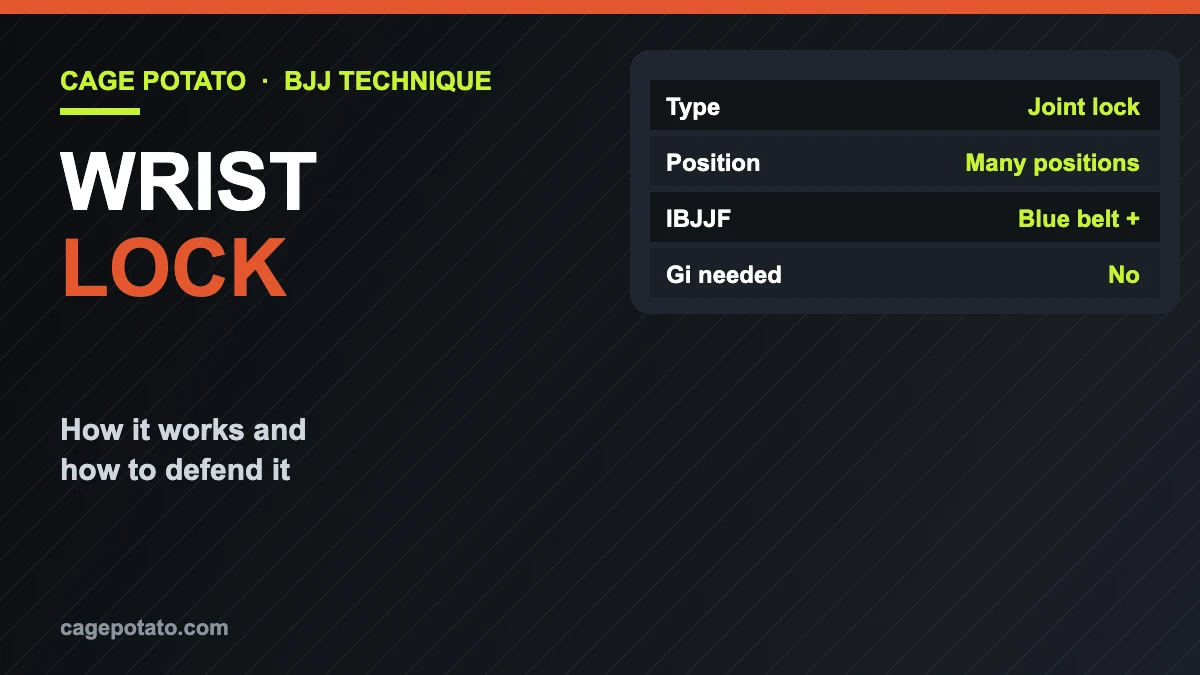
Wrist Lock: How It Works and How to Defend It
A wrist lock bends the opponent’s wrist past its normal range. It can be applied from almost any position and is often used as a surprise attack when an opponent defends another submission.
| Type | Joint lock |
| Main positions | Many positions, often from guard or side control |
| Also known as | Kote gaeshi variations |
| Legality | In IBJJF, not allowed for adult white belts; allowed from blue belt upwards. Legal in MMA. |
How to do the wrist lock
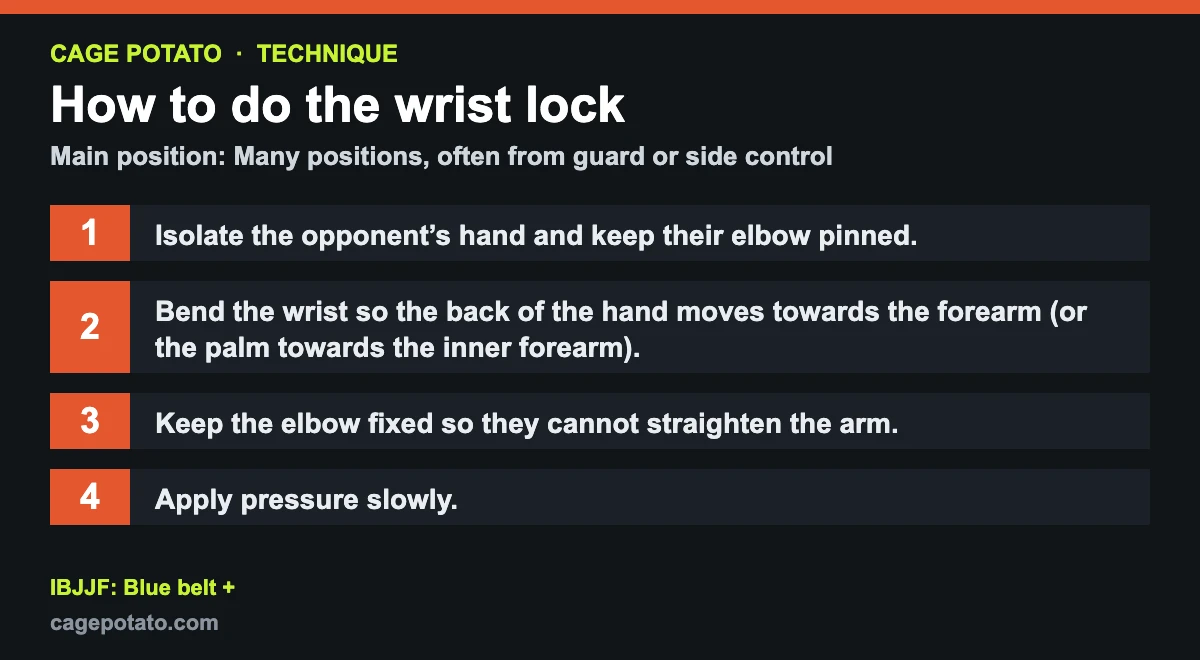
- Isolate the opponent’s hand and keep their elbow pinned.
- Bend the wrist so the back of the hand moves towards the forearm (or the palm towards the inner forearm).
- Keep the elbow fixed so they cannot straighten the arm.
- Apply pressure slowly.
Always learn submissions under a qualified coach and release the hold as soon as your partner taps.
How to defend the wrist lock
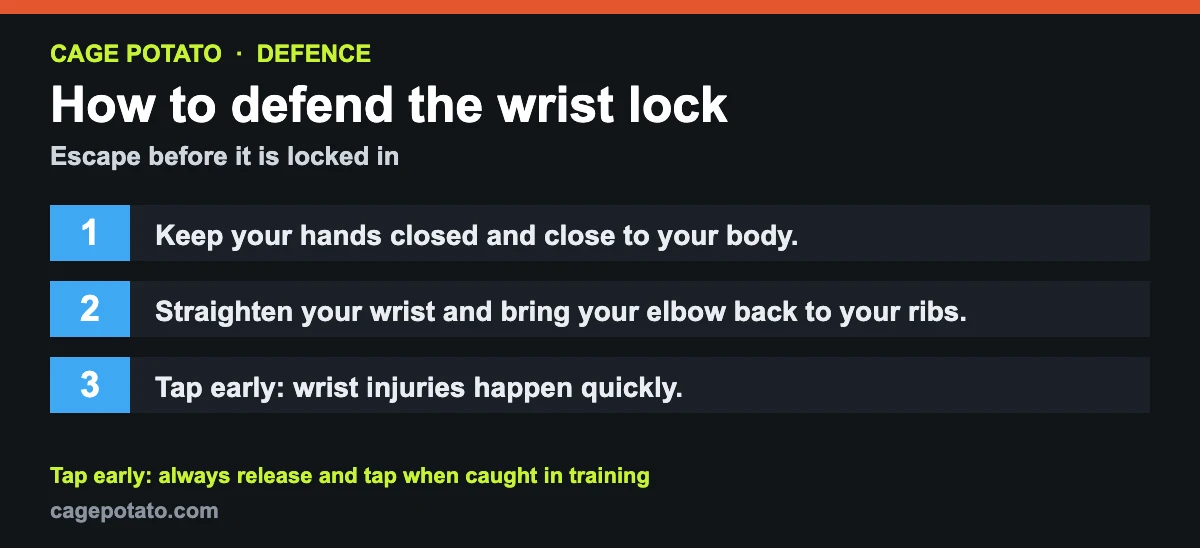
- Keep your hands closed and close to your body.
- Straighten your wrist and bring your elbow back to your ribs.
- Tap early: wrist injuries happen quickly.
More submissions
See our guide to all MMA and BJJ submissions, or read about the .
Wrist Lock FAQs
What is a wrist lock?
A wrist lock bends the opponent’s wrist past its normal range. It can be applied from almost any position and is often used as a surprise attack when an opponent defends another submission..
Is the wrist lock legal in BJJ and MMA?
In IBJJF, not allowed for adult white belts; allowed from blue belt upwards. Legal in MMA.
What position is the wrist lock done from?
The wrist lock is mainly done from many positions, often from guard or side control.