
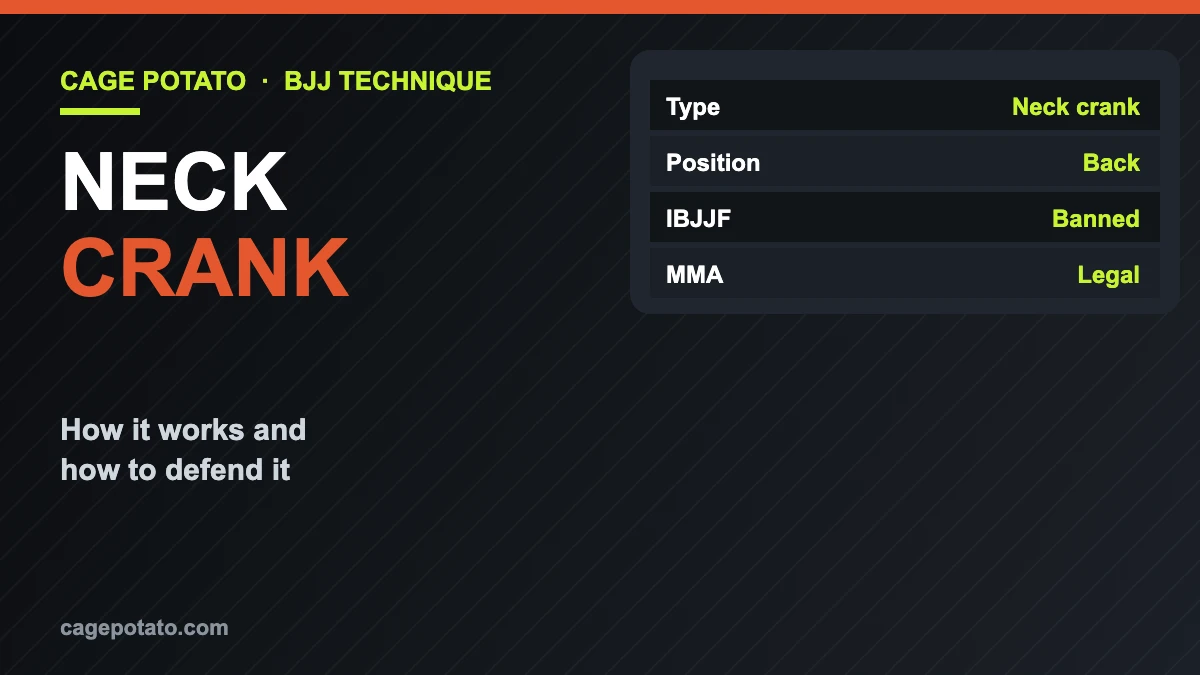
Neck Crank: How It Works and How to Defend It
A neck crank is any submission that twists, bends or stretches the neck beyond its normal range, rather than cutting off blood or air like a choke. Because neck cranks can cause serious injury, they are banned in IBJJF jiu-jitsu but legal in MMA.
| Type | Neck crank |
| Main positions | Back, front headlock, side control, mount |
| Also known as | Cervical lock, spine lock |
| Legality | Not allowed in IBJJF at any level. Legal in MMA (Unified Rules). |
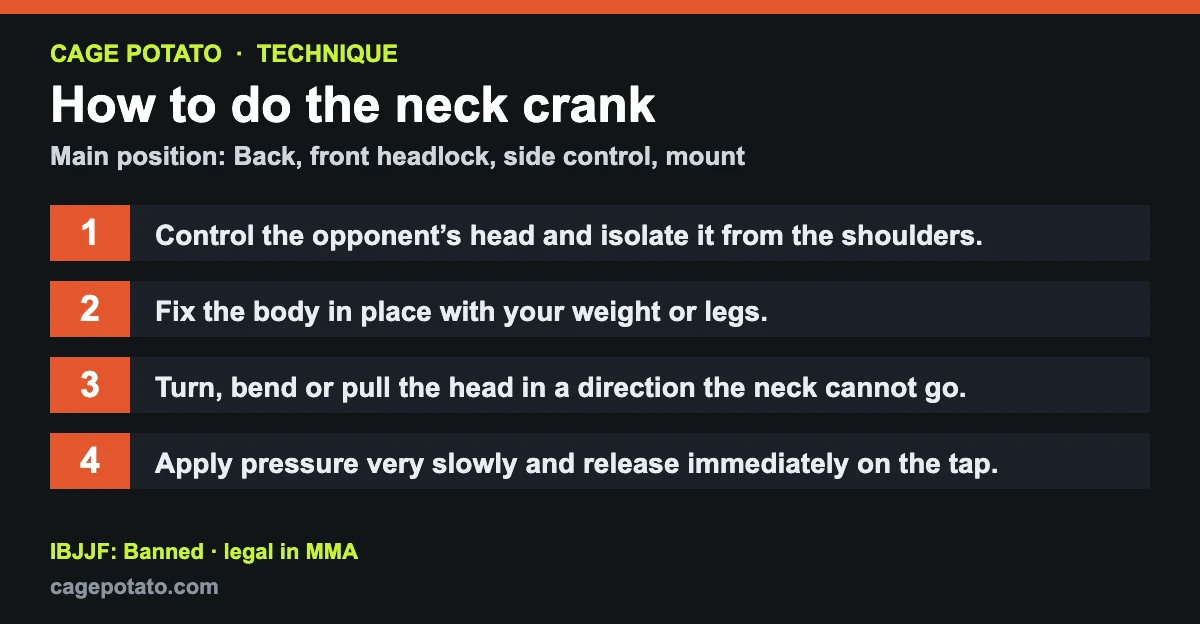
How to do the neck crank
- Control the opponent’s head and isolate it from the shoulders.
- Fix the body in place with your weight or legs.
- Turn, bend or pull the head in a direction the neck cannot go.
- Apply pressure very slowly and release immediately on the tap.
Always learn submissions under a qualified coach and release the hold as soon as your partner taps.
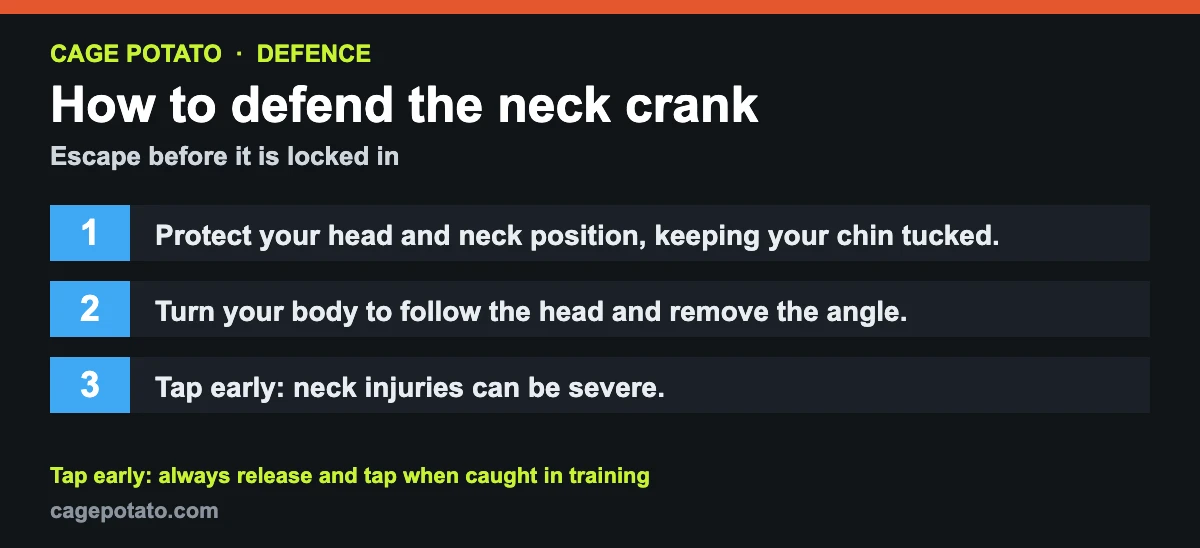
How to defend the neck crank
- Protect your head and neck position, keeping your chin tucked.
- Turn your body to follow the head and remove the angle.
- Tap early: neck injuries can be severe.
More submissions
See our guide to all MMA and BJJ submissions, or read about the Can Opener, Rear-Naked Choke, Guillotine Choke, Triangle Choke.
Neck Crank FAQs
What is a neck crank?
A neck crank is any submission that twists, bends or stretches the neck beyond its normal range, rather than cutting off blood or air like a choke. Because neck cranks can cause serious injury, they are banned in IBJJF jiu-jitsu but legal in MMA..
Is the neck crank legal in BJJ and MMA?
Not allowed in IBJJF at any level. Legal in MMA (Unified Rules).
What position is the neck crank done from?
The neck crank is mainly done from back, front headlock, side control, mount.